
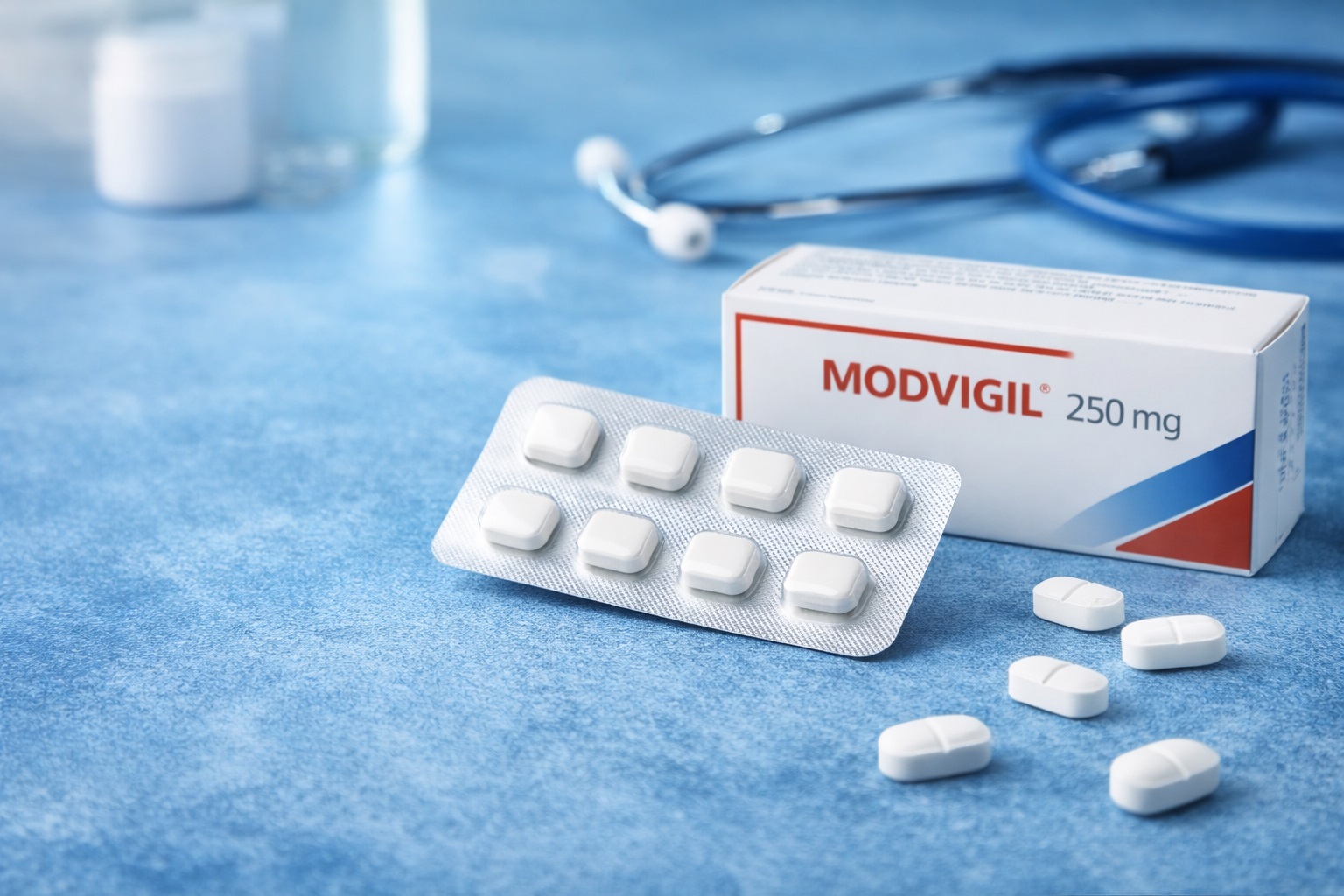
Introduction — Why the 250 mg Dose Draws Attention
Modvigil is most commonly discussed at the 200 mg dose. Yet online searches and patient conversations increasingly focus on Modvigil 250mg. That extra 50 milligrams raises important questions about efficacy, safety, and medical appropriateness.
For general readers, the number alone can be misleading. Higher dose does not automatically mean better results, and in clinical medicine, dose selection is rarely about “more.”
This article examines Modvigil 250mg through a clinical and regulatory lens. The aim is to explain what the dose represents, when it may be considered, and why caution matters.
What Is Modvigil 250mg?
Modvigil 250mg is a higher-strength formulation of modafinil, a wake-promoting agent classified as a eugeroic. Like other Modvigil products, it contains modafinil as the active ingredient.
The distinction lies in dose, not chemistry. Most FDA-approved modafinil regimens center around 200 mg daily, typically taken in the morning.
A 250 mg tablet concentrates more active compound into a single dose, altering exposure rather than mechanism.
How Modafinil Works — Dose Still Matters
Modafinil promotes wakefulness by influencing several neurotransmitter systems, including dopamine, norepinephrine, histamine, and orexin. Its effects are gradual and sustained rather than abrupt.
At higher doses, these same pathways are stimulated more strongly. This can extend wakefulness but also increases the likelihood of side effects.
For a deeper explanation of the neurobiology involved, see How Modvigil Works in the Brain.
Why Some Patients Ask About Modvigil 250mg
In clinical settings, physicians often observe dose-escalation requests from patients who feel 200 mg is “wearing off” too early. Shift workers and individuals with severe excessive daytime sleepiness are especially likely to raise this question.
Another driver is misunderstanding. Some patients equate modafinil with traditional stimulants and assume higher doses guarantee stronger cognitive effects.
In reality, modafinil shows diminishing returns beyond standard dosing, particularly for alertness rather than fatigue resistance.
Off-Label Context and Dose Escalation
While modafinil is FDA-approved for specific sleep disorders, higher-than-standard dosing is considered off-label. Off-label prescribing itself is legal, but it requires individualized risk assessment.
Importantly, Modvigil products are not FDA-approved for sale in the United States. This compounds the uncertainty around dose escalation, especially without clinician oversight.
The broader clinical and legal framework around modafinil use is discussed in Modvigil and Excessive Daytime Sleepiness: Legal, Regulatory, and Clinical Context.
Clinical Insights — What Doctors Actually See
From a physician’s perspective, increasing dose does not always solve inadequate response. Many patients reporting “loss of effect” are experiencing sleep debt, circadian disruption, or tolerance to wakefulness rather than true pharmacologic failure.
Clinicians are often more cautious with higher doses due to modafinil’s long half-life. Accumulation can lead to insomnia that persists into the following night, worsening the original problem.
In practice, dose timing and sleep hygiene are often adjusted before dose strength.
Risks and Side Effects at Higher Doses
Common Dose-Related Effects
As modafinil dose increases, side effects become more likely:
- Headache
- Nervousness or agitation
- Reduced appetite
- Insomnia
These effects are not unique to 250 mg but are more frequently reported as dose rises.
Serious but Rare Risks
Modafinil carries a known risk of severe skin reactions, including Stevens-Johnson syndrome. Although rare, this risk is not dose-independent.
Higher exposure may also increase cardiovascular strain in susceptible individuals, particularly those with underlying heart conditions.
Differences in inactive ingredients may further influence tolerability. For formulation details, see What Are the Ingredients of Modvigil?.
Modvigil 250mg vs Other Options
Compared With Standard 200 mg
Clinically, 200 mg remains the reference dose because it balances wakefulness with tolerability. Moving to 250 mg offers modest extension of effect for some patients but disproportionate side-effect risk for others.
There is no strong evidence that 250 mg improves cognition beyond alertness.
Compared With Armodafinil
Some clinicians prefer switching compounds rather than increasing dose. Armodafinil has a longer half-life and may provide smoother coverage without higher peak exposure.
A comparative overview is available in Overview: Modvigil vs Artvigil.
Cost and Access Considerations
Higher-dose tablets often appeal to patients seeking convenience or perceived value. However, price differences are not always proportional to dose.
Cost and sourcing issues surrounding Modvigil products are discussed in Modvigil Price Over the Counter: What Patients Need to Know.
Affordability should never override safety or legality considerations.
Regulatory Notes — Why Dose and Approval Intersect
In the United States, FDA-approved modafinil dosing guidelines are based on extensive clinical trials. Modvigil 250 mg does not fall under those approvals.
Regulatory guidance emphasizes that higher doses have not demonstrated superior benefit in controlled settings. Approval status matters because it reflects evidence, not just access.
Authoritative information can be found through:
- U.S. Food and Drug Administration (FDA)
https://www.fda.gov - National Institutes of Health (NIH)
https://www.nih.gov - World Health Organization (WHO)
https://www.who.int
Conclusion — More Is Not Always Better
Modvigil 250 mg represents a higher-dose approach to wakefulness, not a different drug. For some patients, it may extend alertness slightly. For others, it introduces unnecessary risk.
In clinical medicine, effectiveness is measured by balance, not intensity. Understanding dose, context, and regulation helps patients make safer, more informed decisions.
For broader educational resources on modafinil-based therapies, visit mymodvigil.com.
Medical Disclaimer
This article is for informational purposes only and not a substitute for professional medical advice. Always consult a qualified healthcare provider.