
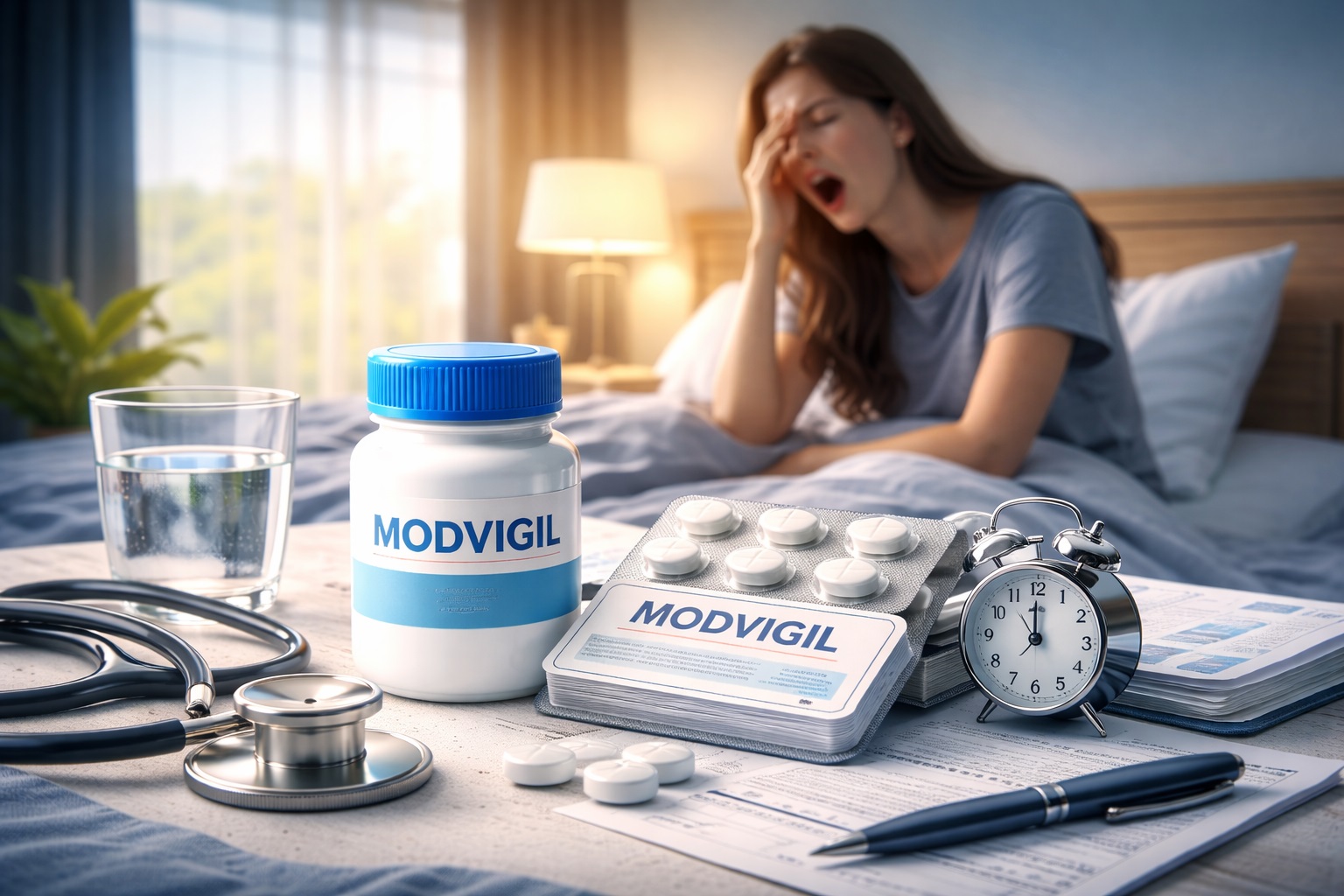
Excessive daytime sleepiness (EDS) is a medically recognized condition that affects alertness, occupational safety, and quality of life. Discussions around Modvigil and excessive daytime sleepiness often focus on effectiveness, but lawful use depends on regulatory classification, approved indications, and prescribing controls rather than symptom severity alone.
This article examines Modvigil in the context of excessive daytime sleepiness from a legal and regulatory standpoint. It explains how authorities classify modafinil-based medicines, how EDS is treated within approved frameworks, and what compliance considerations apply to prescribing, possession, and importation.
What Is Excessive Daytime Sleepiness in Regulatory Terms?
Excessive daytime sleepiness is not a standalone diagnosis in most legal frameworks. Regulators define EDS as a symptom associated with underlying sleep disorders such as narcolepsy, obstructive sleep apnea, or shift work sleep disorder.
Medicines used to manage EDS are approved only when the symptom is linked to a recognized condition. Regulatory authorities do not authorize treatment based solely on subjective fatigue or performance concerns, regardless of severity.
Modvigil’s Regulatory Identity
Modvigil is a branded generic formulation of modafinil. From a legal perspective, regulators assess Modvigil based on its active ingredient rather than its trade name. As a result, Modvigil is regulated under the same frameworks as modafinil products approved for specific sleep-related indications.
Modvigil is frequently discussed alongside formulations such as Artvigil, Modalert, and Waklert. Despite branding differences, all are subject to the same legal restrictions when evaluated under national medicines law.
Approved Use for Excessive Daytime Sleepiness
In jurisdictions where modafinil is authorized, approval typically covers excessive daytime sleepiness associated with:
- Narcolepsy
- Shift work sleep disorder
- Residual sleepiness in obstructive sleep apnea
Regulators emphasize that treatment is indication-specific. Use outside these contexts may constitute off-label prescribing, which remains lawful only within professional medical oversight and does not alter prescription-only status.
United States: FDA Oversight and Classification
In the United States, modafinil is classified as a Schedule IV controlled substance under the Controlled Substances Act. The Food and Drug Administration (FDA) approves modafinil for specific sleep-related indications that include excessive daytime sleepiness as a defining symptom.
Schedule IV classification reflects recognized medical use with lower abuse potential relative to stimulants, while still imposing prescription-only controls. As a result, Modvigil may be lawfully used for EDS only when obtained through a valid prescription.
Prescribing Controls and Professional Responsibility
Physicians prescribing modafinil-based products for daytime sleepiness must document an approved underlying diagnosis. Regulatory guidance requires clinicians to assess cardiovascular risk, psychiatric history, and potential drug interactions before initiating therapy.
Discussions about Modvigil cost or affordability do not influence regulatory classification. Prescription legality depends on diagnosis and compliance, not market pricing or perceived necessity.
Importation and Customs Enforcement
Excessive daytime sleepiness does not grant exemption from import restrictions. Even when modafinil is lawfully prescribed domestically, importing Modvigil from abroad may violate FDA and customs rules if the product is unapproved, mislabeled, or sourced outside authorized supply chains.
Enforcement decisions often consider labeling accuracy, declared use, and manufacturer registration. Individuals importing Modvigil for EDS without proper documentation may face seizure or refusal at the border.
Ingredients, Labeling, and Compliance
Regulators evaluate safety and legality based on formulation consistency and transparency. Information about Modvigil ingredients is relevant to interaction warnings, dosing accuracy, and labeling compliance.
Even where users report positive experiences in Modvigil review discussions, such accounts have no legal relevance. Authorities rely exclusively on approved product information and pharmacovigilance data.
Cognitive Wakefulness and Public Perception
Excessive daytime sleepiness is often discussed in broader conversations about cognition, productivity, and the brain. While modafinil-based medicines influence wakefulness, regulators distinguish sharply between medical treatment and cognitive enhancement.
Use motivated solely by performance optimization does not expand lawful access or reduce prescription requirements, even when symptoms resemble clinical sleepiness.
Pricing, Packaging, and Risk Indicators
Differences in Modvigil price across markets can create confusion about legality. Regulatory authorities do not consider price disparities when determining lawful possession or import status.
Packaging also plays a role in enforcement. Non-standard or inconsistent Modvigil blister formats may trigger additional scrutiny if labeling does not align with regulatory expectations.
Ingredient Transparency and Trust
Disclosure of the ingredients of Modvigil supports regulatory trust and safety oversight. Products lacking clear composition or traceable manufacturing origin are more likely to be treated as unapproved drugs, regardless of intended use for excessive daytime sleepiness.
Conclusion
Modvigil and excessive daytime sleepiness are connected through tightly regulated medical pathways rather than consumer choice. While modafinil-based medicines are approved to manage EDS linked to specific sleep disorders, lawful use depends on prescription compliance, diagnosis, and supply-chain legitimacy.
Individuals experiencing excessive daytime sleepiness should understand that symptom severity alone does not alter legal status. Regulatory compliance remains essential for prescribing, importation, and continued lawful use.